
+86-188-7042-1176
project@juchengjm.com
Mon-Fri: 8am-6pm (GMT+8)
EN
ISO 9001:2015 Certified
Aluminum MIC-6
MIC-6 Aluminum Cast Tooling Plate is a unique material designed specifically for dimensional stability. Unlike rolled plates (like 6061) which have internal grain direction and stress, MIC-6 is cast and fully stress-relieved. This means when you machine away material, it does not move, warp, or twist. It comes from the mill with a precision-ground surface on both sides. At Jucheng Precision, we utilize MIC-6 extensively for manufacturing high-precision jigs, fixtures, and base plates. While it lacks the tensile strength of 6061, its superior flatness retention makes it the gold standard for parts where geometry is more important than raw strength.
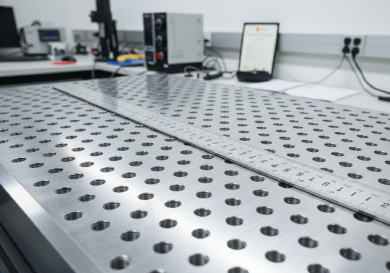
MIC-6 Machining Capabilities
| Capability | Technical Description | Jucheng Advantage |
|---|---|---|
| High-Precision Flatness | MIC-6 is cast and stress-relieved, meaning it does not warp when material is removed. We use fly cutters to maintain flatness within 0.02mm over large areas. | Perfect for manufacturing large inspection base plates and electronic mounting beds that require absolute stability. |
| Hole Boring & Reaming | Machining precise dowel pin holes and grids. | Our CNC centers hold positional accuracy to +/- 0.01mm, ensuring your fixtures align perfectly every time. |
| Thread Reinforcement | Cast aluminum has lower thread strength. We automatically install stainless steel Helicoil or STI inserts during the machining process. | Increases the durability of the fixture threads, allowing for thousands of assembly cycles. |
| Surface Protection | Hard Anodizing MIC-6 to create a wear-resistant surface for sliding components. | Protects the relatively soft aluminum surface from scratching during daily industrial use. |
Fabrication Guidelines for MIC-6 Aluminum
Not for Structural Loads:
MIC-6 has low tensile strength compared to 6061 or 7075. Tip: Do not use MIC-6 for parts that will be bent or subjected to high structural loads; it is brittle and will crack.
Thread Strength:
Because it is a cast material with a granular structure, tapped threads can strip easily. Tip: Always use threaded inserts (Helicoils/Keenserts) for holes that will be bolted frequently.
Welding:
Not recommended. Welding destroys the stress-relieved properties and flatness that make MIC-6 valuable.
Primary Applications
Jigs & Fixtures
The #1 choice for CNC machining fixtures, checking gauges, and CMM holding fixtures due to its stability.
Electronics Manufacturing
Base plates for chip placement machines and circuit board printing where thermal expansion must be minimized.
3D Printing
Heated print beds for industrial 3D printers. MIC-6 stays flat even when heated, ensuring a perfect first layer.
Packaging Machinery
Guide plates and vacuum tables that require intricate air channels and flat sealing surfaces.
Properties
| Density | 2.79 g/cm³ |
| Tensile Strength | 165 MPa |
| Yield Strength | 103 MPa |
| Hardness | 65 HB (Brinell) |
| Elongation at Break | 3% |
| Thermal Conductivity | 142 W/m-K |
| Flatness Deviation | < 0.127 mm |
| Internal Stress | Near Zero |
| Machinability Rating | Excellent |
| Weldability | Poor |
| Max Part Size | 2000 x 1000 x 100 mm |