
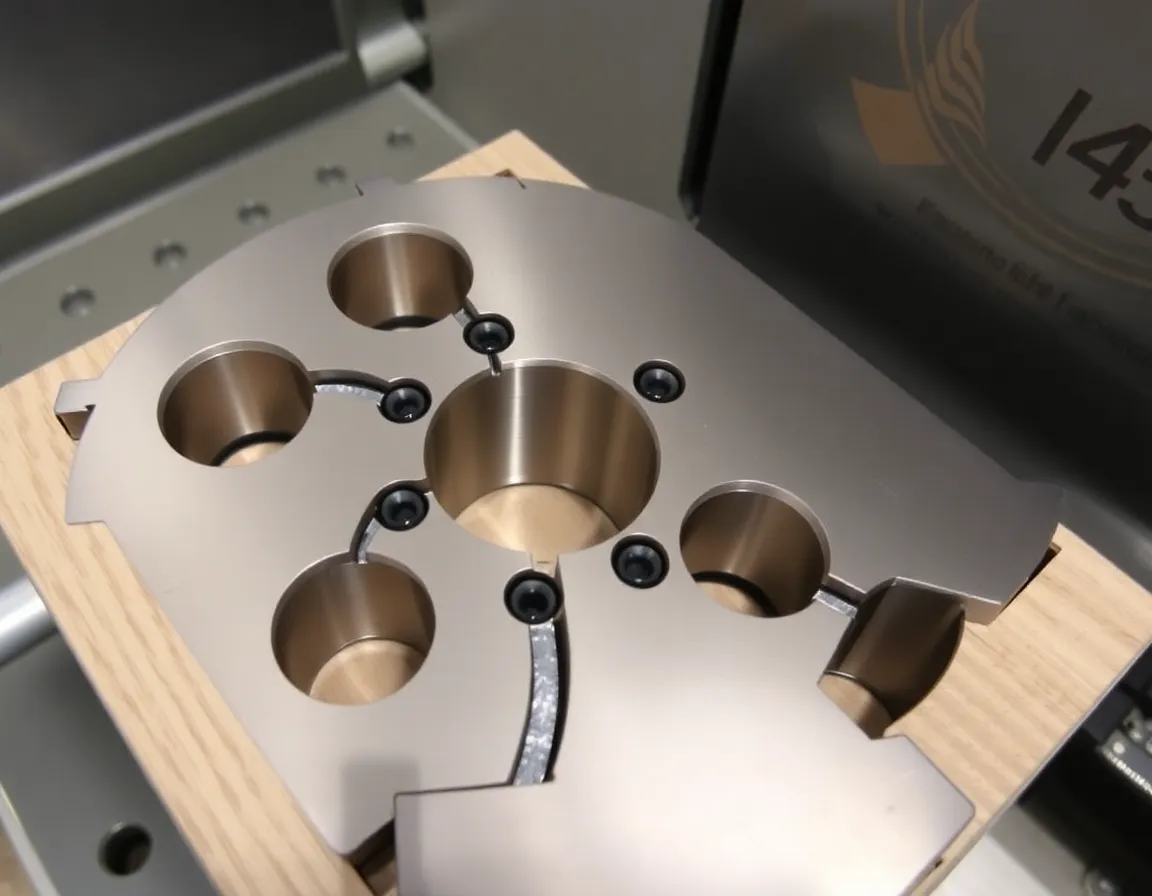
In the relentless pursuit of productivity, manufacturers are constantly searching for ways to shave seconds—or even minutes—off their cycle times. While advanced CAM software and high-speed toolpaths often steal the spotlight, one of the most impactful innovations happens at the very foundation of the machining process: workholding. For shops running high-mix, low-volume production, the traditional method of indicating a vise or boring soft jaws for every new job is a silent killer of profitability. The solution lies in custom chuck jaws, a technology that is redefining the concept of rapid changeover and enabling what industry experts call "zero-setup machining."
Understanding Custom Chuck Jaws
At its core, a chuck jaw is the component on a lathe or turning center that grips the workpiece. Standard jaws—typically hard jaws or two-piece jaws—are designed for general-purpose gripping. They are robust and reliable but require significant manual intervention to dial in concentricity for precise work. Custom chuck jaws, by contrast, are engineered specifically for a particular part geometry or family of parts.
These jaws are not simply off-the-shelf accessories. They are precision-machined components designed to match the exact profile of the workpiece. This customization can take several forms, from boring soft jaws to match a specific diameter to complex, form-ground jaws that grip irregular shapes. The goal is always the same: to create a repeatable, self-centering interface between the machine spindle and the part.
The Role of Soft Jaws vs. Hard Jaws
While hard jaws are case-hardened and designed for roughing, custom jaws are frequently made from softer materials like aluminum or mild steel. These "soft jaws" are machined in place on the chuck. Because they are machined while mounted on the machine, they compensate for any inherent spindle runout or chuck wear. This process, known as "boring the jaws," creates a perfect circle that is concentric to the machine's axis of rotation. When a custom jaw is form-machined to the exact geometry of a workpiece, it eliminates the need for manual indicating.
How Custom Jaws Enable Zero-Setup Machining
The concept of "zero-setup" does not imply that a machine starts itself. Rather, it refers to the elimination of the manual, time-consuming adjustment phase traditionally required between jobs. Custom chuck jaws are the linchpin of this methodology.
Repeatability and Pre-Loading
The primary mechanism behind zero-setup is repeatability. When a set of custom jaws is machined for a specific job, the geometry of those jaws is permanently recorded in the physical profile of the jaw material. If the job runs again next month, the operator simply bolts the dedicated jaw set onto the chuck. Because the jaws were machined on that specific machine, they will center the part automatically.
This allows for pre-loading—the practice of setting up the next job while the current job is still running. The operator can mount the custom jaws onto a spare chuck or a jaw pallet outside the machine. When the current batch is complete, the operator swaps the entire jaw set. The machine is ready to run the next part within minutes, not hours.
Eliminating the Indicating Process
In a traditional setup, an operator must mount the part, tighten the chuck, and then use a dial indicator to tap the part into concentricity. This process is repeated until the runout is within tolerance. This is a highly skilled, manual task that varies in duration depending on the operator's experience. Custom jaws eliminate this entirely. The jaws act as a pre-set fixture. The moment the part is clamped, it is aligned. This not only saves time but also removes the human error factor, ensuring that the first part of the day is as accurate as the last.
The Business Case: Benefits Beyond Speed
While the speed of changeover is the most obvious benefit, the advantages of custom chuck jaws extend deep into the financial and operational health of a machine shop.
1. Increased Machine Uptime
In high-mix manufacturing, the machine is often idle while the operator is setting up the next job. By reducing setup time from 60 minutes to 5 minutes, shops can reclaim hours of spindle time every week. This increased uptime directly translates to higher revenue per machine hour.
2. Improved Part Accuracy and Quality
Custom jaws provide a larger contact area with the workpiece compared to standard jaws. This distributes clamping force more evenly, reducing the risk of part distortion—a critical factor when machining thin-walled components. Furthermore, because the jaws are machined to the specific diameter of the part, the clamping force is consistent, leading to better surface finishes and tighter tolerances.
3. Reduced Operator Fatigue and Skill Dependency
Manual indicating is tedious and requires a high level of skill. By using custom jaws, shops can delegate setup tasks to less experienced operators. The machine does the "thinking" through the geometry of the jaws, freeing up skilled machinists to focus on programming or process improvement.
4. Protection of the Workpiece
Standard hard jaws can leave marks on finished surfaces. Custom jaws, often made of aluminum or soft steel, conform to the part and grip it securely without marring the surface. This is particularly important for aerospace and medical components where surface integrity is paramount.
Aplicaciones y buenas prácticas
Custom chuck jaws are not limited to simple cylindrical parts. Their applications are as diverse as the parts being machined.
- Irregular Geometries: Custom jaws can be machined to grip castings, forgings, or asymmetric parts that standard jaws cannot hold securely.
- Thin-Walled Components: For parts like bearing races or thin tubes, custom jaws can be designed to provide full circumferential support, preventing crushing or deformation during clamping.
- High-Volume Production: Even in high-volume runs, custom jaws are used to reduce load/unload times and ensure consistent quality throughout the batch.
- Second Operations: When a part needs to be flipped or machined on the back end, custom jaws can grip on the already-machined surface without damaging it.
Mejores prácticas para la implementación
To maximize the benefits of custom chuck jaws, shops should adhere to several best practices:
- Machine Jaws In-Place: Always machine the jaws while they are mounted on the chuck they will be used on. This ensures that the jaws compensate for the specific machine's spindle error.
- Mark and Organize: Clearly label each set of jaws with the part number and job number. Store them in a organized tooling cabinet to prevent damage and ensure they are easy to find.
- Use the Right Material: Select jaw material based on the application. Aluminum is ideal for delicate parts, while steel may be necessary for heavier workpieces.
- Maintain Clamping Force: Be aware that soft jaws can wear over time. Regularly inspect them for wear and re-machine or replace them as needed to maintain accuracy.
Conclusión
Custom chuck jaws represent a strategic investment in efficiency. By moving the setup process off the machine and into the jaw manufacturing phase, shops can achieve the elusive goal of zero-setup machining. This approach transforms the lathe from a machine that requires constant babysitting into a flexible, automated asset. In a market that demands faster turnarounds and higher precision, the secret to staying competitive may very well be found in the jaws of the chuck.