
First article inspection for CNC machined parts is a production-release checkpoint, not a ceremonial report. It confirms that the drawing, material, program, tooling, fixture, machining sequence, finishing route, and inspection method have produced a representative part that meets the agreed requirements. A passing first article supports a decision to continue; it does not guarantee that every later part will remain conforming.
The distinction matters to overseas buyers. A supplier can make one excellent sample through extra adjustment, hand selection, or a temporary setup. The real question is whether the inspected part represents the process intended for the order. This guide explains what FAI should prove, when it should be repeated, what belongs in the report, and how buyers can define an approval gate without creating unnecessary delay.
The release question comes before the inspection form
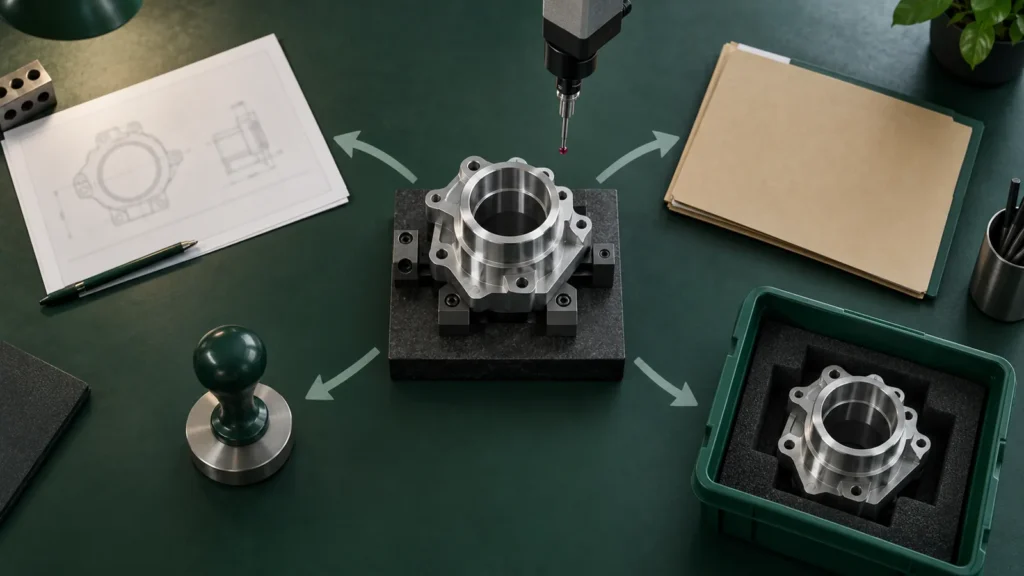 Before choosing a template, decide what production is waiting for. In one project, the supplier may continue after internal first-piece approval. In another, the machine must stop until the buyer reviews a dimensional report. For a regulated program, the customer may require a formal First Article Inspection Report with specific forms and supporting records.
A useful release instruction states four things:
Before choosing a template, decide what production is waiting for. In one project, the supplier may continue after internal first-piece approval. In another, the machine must stop until the buyer reviews a dimensional report. For a regulated program, the customer may require a formal First Article Inspection Report with specific forms and supporting records.
A useful release instruction states four things:
Without those rules, “FAI required” can mean anything from a photograph and three measurements to a complete characteristic-accountability package. The ambiguity affects quotation, inspection time, machine scheduling, and delivery planning.
What a representative first article must preserve
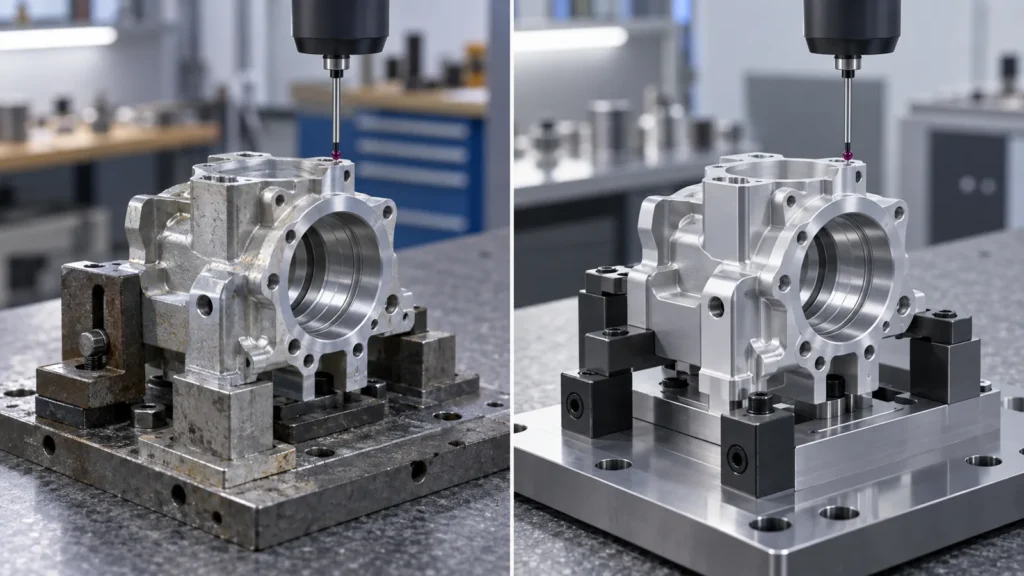 The first article should be made under the production conditions it is expected to validate. If the sample uses different material, a different fixture, a prototype program, a temporary tool, or an alternative finishing supplier, its result may not support release of the planned batch.
For CNC prototypes that will not continue into production, a limited dimensional check may be sufficient. For repeat production, the first article should capture the process definition that future orders can reference. The broader manufacturing sequence is explained in the CNC machining process guide.
FAI should account for more than dimensions
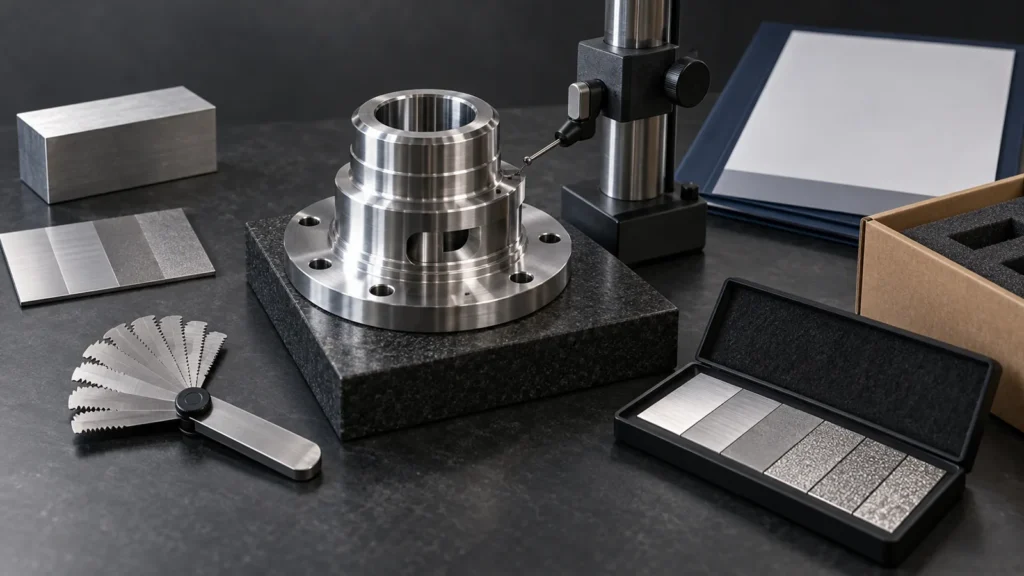 A dimensional report can show nominal values, tolerances, and measured results, but dimensions are only one part of conformity. The drawing may also control material, heat treatment, surface finish, edge condition, threads, marking, cleanliness, assembly, special tests, and packaging.
A buyer-ready first article package may include, when required. This is especially important when the route includes post-processing for CNC parts, because the final evidence must connect the machined condition, outside process, and released part.
A dimensional report can show nominal values, tolerances, and measured results, but dimensions are only one part of conformity. The drawing may also control material, heat treatment, surface finish, edge condition, threads, marking, cleanliness, assembly, special tests, and packaging.
A buyer-ready first article package may include, when required. This is especially important when the route includes post-processing for CNC parts, because the final evidence must connect the machined condition, outside process, and released part.
- a ballooned drawing or characteristic list tied to report rows;
- actual dimensional results rather than pass/fail alone;
- material grade, condition, heat or batch reference, and applicable certificate;
- special-process certificates linked to the correct part and revision;
- inspection equipment or method identification where contractually required;
- photographs or visual acceptance evidence for appearance-critical areas;
- records of approved deviations and the authority that accepted them.
The report should not imply that a characteristic was verified when the supplier only reviewed a certificate or copied a drawing value. Measured results, certificate evidence, visual checks, functional gauges, and supplier declarations answer different questions and should be identified accordingly.
When a new or partial FAI becomes necessary
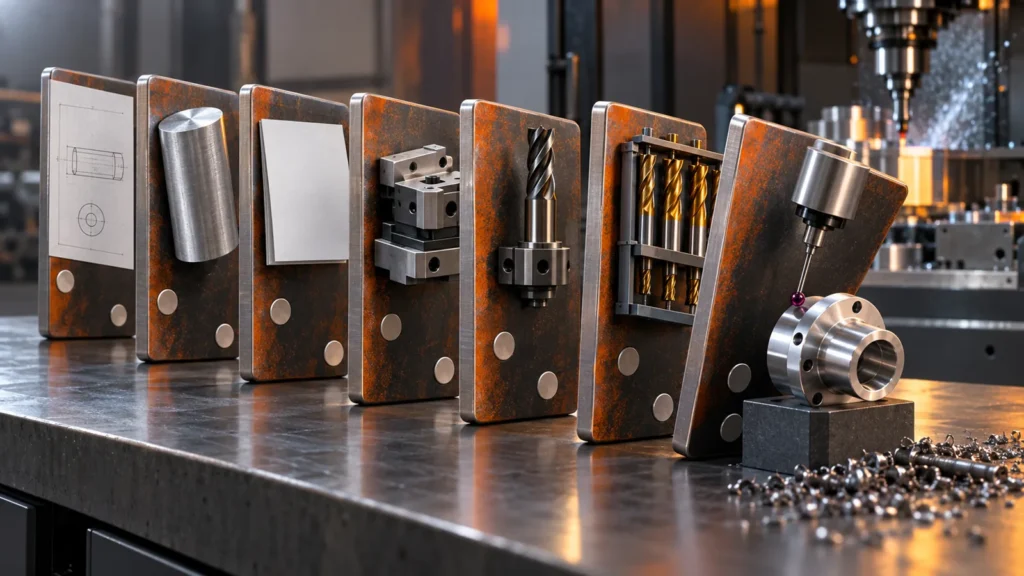 A first article is not permanently valid just because a part number has been produced before. A change can invalidate all or part of the earlier evidence. The required response depends on customer rules, the drawing, the purchase order, and the effect of the change.
Common triggers include:
A first article is not permanently valid just because a part number has been produced before. A change can invalidate all or part of the earlier evidence. The required response depends on customer rules, the drawing, the purchase order, and the effect of the change.
Common triggers include:
A partial or delta FAI can be appropriate when only defined characteristics are affected. However, the rationale must be recorded. “Only the title block changed” and “the datum scheme changed” are not equivalent events. The affected-feature review should consider downstream dimensions, setups, inspection alignment, and documentation—not just the redlined line.
The approval decision needs three separate answers
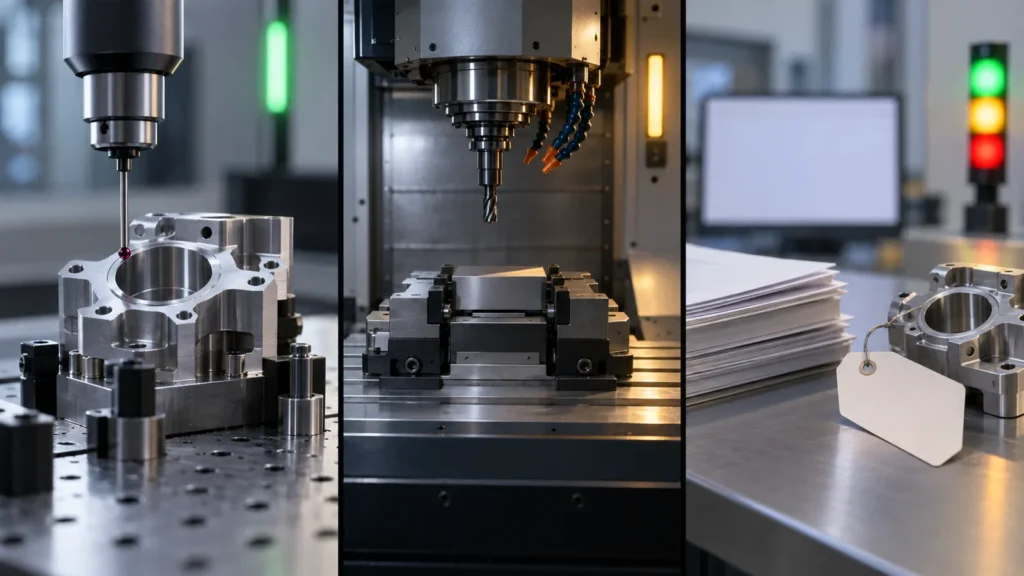 A strong review does not reduce the result to a single green box. It separates product conformity, process readiness, and document completeness.
A part can be dimensionally acceptable while its material record is missing. A report can be perfectly formatted while the machined feature fails. A first article can pass while the continuing process remains vulnerable to tool wear or thermal drift. Keeping the three answers separate makes the release decision more precise.
Make the report reviewable, not merely complete
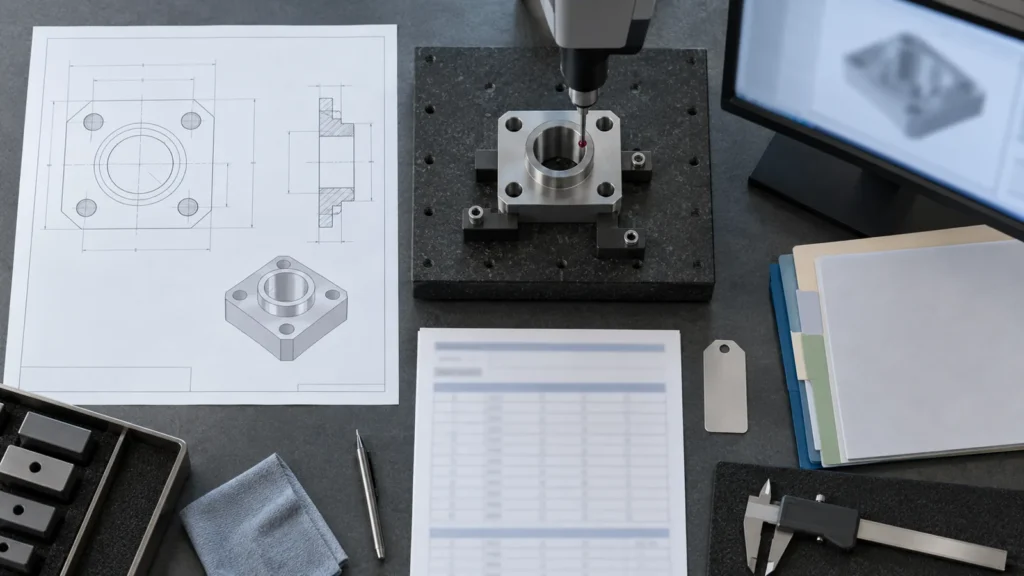 A first article package can contain all the necessary files and still be difficult to approve. The buyer should not have to guess whether “Item 27” refers to a drawing dimension, a note, or a surface requirement. Use a stable characteristic numbering system that connects the ballooned drawing, result sheet, certificates, and any approved deviations.
Actual values should retain their units and suitable resolution. Where a characteristic is verified by a functional gauge, certificate, visual standard, or test rather than a variable measurement, identify that evidence type. A blanket “OK” can hide whether the supplier measured the condition or simply confirmed that a document existed. For CMM results, preserve the datum alignment and feature naming needed to interpret the report.
File names should also carry useful identity: part number, revision, FAI status, and submission date or sequence. If the buyer returns comments, revisions should be controlled so that an obsolete result sheet is not combined with a corrected drawing. A concise cover index can list every required deliverable and its status. This small step shortens review time more effectively than sending one unstructured archive with dozens of ambiguously named files.
A first article package can contain all the necessary files and still be difficult to approve. The buyer should not have to guess whether “Item 27” refers to a drawing dimension, a note, or a surface requirement. Use a stable characteristic numbering system that connects the ballooned drawing, result sheet, certificates, and any approved deviations.
Actual values should retain their units and suitable resolution. Where a characteristic is verified by a functional gauge, certificate, visual standard, or test rather than a variable measurement, identify that evidence type. A blanket “OK” can hide whether the supplier measured the condition or simply confirmed that a document existed. For CMM results, preserve the datum alignment and feature naming needed to interpret the report.
File names should also carry useful identity: part number, revision, FAI status, and submission date or sequence. If the buyer returns comments, revisions should be controlled so that an obsolete result sheet is not combined with a corrected drawing. A concise cover index can list every required deliverable and its status. This small step shortens review time more effectively than sending one unstructured archive with dozens of ambiguously named files.
 FAI delays often begin before machining. The supplier receives a CAD model without a controlled drawing, a drawing with conflicting revisions, an undefined cosmetic requirement, or a request for “full inspection” without a required format. The inspection team then waits for clarification after the machine is already scheduled.
At RFQ stage, provide the drawing and revision, identify critical characteristics, define the first-article quantity, state whether buyer approval is required before continuation, and list required documents. If a specific template, portal, or naming convention is mandatory, include it before quotation. If the project only needs a limited first-piece report, say so explicitly.
The supplier should respond with questions about inaccessible features, datum interpretation, measurement method, destructive tests, post-processing sequence, and any characteristic that cannot be verified as drawn. These questions are evidence of planning, not a sign that inspection is weak. Jucheng’s quality capabilities page provides general context, while the order-specific inspection and reporting scope should be agreed from the actual drawing.
FAI delays often begin before machining. The supplier receives a CAD model without a controlled drawing, a drawing with conflicting revisions, an undefined cosmetic requirement, or a request for “full inspection” without a required format. The inspection team then waits for clarification after the machine is already scheduled.
At RFQ stage, provide the drawing and revision, identify critical characteristics, define the first-article quantity, state whether buyer approval is required before continuation, and list required documents. If a specific template, portal, or naming convention is mandatory, include it before quotation. If the project only needs a limited first-piece report, say so explicitly.
The supplier should respond with questions about inaccessible features, datum interpretation, measurement method, destructive tests, post-processing sequence, and any characteristic that cannot be verified as drawn. These questions are evidence of planning, not a sign that inspection is weak. Jucheng’s quality capabilities page provides general context, while the order-specific inspection and reporting scope should be agreed from the actual drawing.
After approval, control the process—not just the report
 FAI is strongest when it becomes the baseline for production rather than a document filed away. Critical dimensions should be connected to an in-process or final inspection frequency. Tool-life risks, setup-dependent features, distortion-sensitive geometry, and post-process dimensional changes should have defined checkpoints and reactions.
This is where FAI and ongoing CNC machining quality control separate. The first article confirms a representative starting point. Process control monitors whether later output remains consistent with that starting point. For larger or repeated batches, capability evidence may be more meaningful than repeatedly celebrating one conforming sample.
FAI is strongest when it becomes the baseline for production rather than a document filed away. Critical dimensions should be connected to an in-process or final inspection frequency. Tool-life risks, setup-dependent features, distortion-sensitive geometry, and post-process dimensional changes should have defined checkpoints and reactions.
This is where FAI and ongoing CNC machining quality control separate. The first article confirms a representative starting point. Process control monitors whether later output remains consistent with that starting point. For larger or repeated batches, capability evidence may be more meaningful than repeatedly celebrating one conforming sample.
First article inspection FAQs

Is the first machined piece automatically the first article?
No. The first article should represent the defined production process. A setup piece or trial made with temporary tooling may be useful for adjustment but may not be suitable for formal approval.
Does FAI require every dimension to be measured?
It depends on the applicable customer, standard, drawing, and purchase-order requirements. Some formal programs require accountability for all design characteristics; other commercial orders use an agreed critical-feature report.
Can production continue before buyer approval?
Only if the agreed release rule allows it. The purchase order should state whether the supplier may continue after internal approval or must wait for written customer authorization.
Does a passing FAI prove the whole batch is good?
No. It proves that the inspected representative article met the defined scope. Batch conformity and process stability require continuing controls, sampling, or capability evidence appropriate to the order.
The practical rule is simple: define what the first article must prove before production begins. A clear release point, representative process, characteristic-linked report, and documented reaction plan turn FAI from paperwork into a useful manufacturing decision.