
+86-188-7042-1176
project@jcproto.com
Mon-Fri: 8am-6pm (GMT+8)
EN
ISO 9001:2015 Certified
Internal Grinding (ID Grinding)
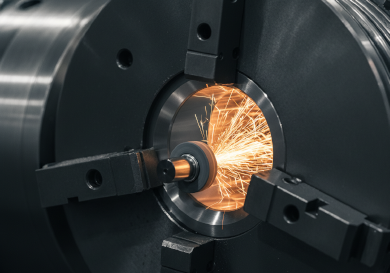
Internal Grinding (ID Grinding) is an abrasive machining process used to finish the inner diameter of a workpiece. It is essential for parts requiring precise bore sizing, perfect roundness, and a high-quality surface finish that drilling or boring cannot achieve—especially in hardened materials.
At Jucheng Precision, we utilize universal grinding machines capable of performing both ID and OD grinding in a single setup. This ensures absolute concentricity between the inner bore and outer diameter. We specialize in grinding hardened steel bushings, bearing races, and collets to tolerances within 0.005mm, correcting any heat-treat distortion to ensure a perfect fit.
Key Specifications
| Specification | Technical Range | Note |
|---|---|---|
| Min Bore Diameter | 5 mm | Limited by quill size |
| Max Bore Diameter | 300 mm | Machine capacity |
| Max Grind Depth | 200 mm | Quill rigidity dependent |
| Bore Tolerance | +/- 0.005 mm | H6 / H7 fits standard |
| Surface Roughness (Ra) | 0.4 µm – 0.8 µm | Fine finish for seals |
| Concentricity (ID to OD) | < 0.003 mm | When ground in one setup |
| Standard Lead Time | 3 – 5 Days | Precision process |
Internal Grinding Methods
| Method | Description | Key Benefits & Applications |
|---|---|---|
| Chucking ID Grinding | The part is held in a chuck or collet and rotates while the grinding wheel oscillates inside the bore. | Benefit: High rigidity for general parts. App: Gears, flanges, bushings. |
| Universal ID/OD Grinding | Grinding both the Outside and Inside diameters in one clamping setup using a swiveling wheelhead. | Benefit: Guarantees perfect alignment (concentricity) between ID and OD. App: Machine spindles, tool holders. |
| Jig Grinding | A specialized process where the grinding spindle moves in an orbital planetary motion (for non-round parts or multiple holes). | Benefit: Ultra-precise hole location positioning. App: Die sets, complex mold plates. |
Design Guidelines for Internal Grinding
Blind Holes:
Grinding a blind hole (a hole that doesn’t go all the way through) is difficult because the wheel cannot touch the bottom. Tip: Always include a “grinding relief” or undercut at the bottom of the bore so the wheel can over-travel slightly.
Wall Thickness:
Thin-walled parts are very difficult to ID grind. The pressure of the chuck jaws can deform the part out-of-round. Tip: Maintain sufficient wall thickness or design a flange for clamping.
Length-to-Diameter Ratio:
Deep, small holes require long, thin grinding quills which are prone to vibration (chatter). Tip: Avoid designing ground holes deeper than 5x their diameter.
Through Holes Preferred:
Whenever possible, design through-holes. This allows the coolant to flush chips out effectively and allows the wheel to pass completely through for a uniform cylinder.
Industry Applications
Bearings
Grinding the inner races of roller bearings to handle high rotational speeds and loads without failure.
Automotive Gears
The central bore of transmission gears is ground to ensure it fits perfectly onto the shaft, preventing wobble and noise.
Hydraulics
Hydraulic cylinder bodies are ID ground (or honed) to create a smooth surface for the piston seal, preventing leakage.
Machine Tooling
Collets and tool holders require ID grinding to ensure they hold cutting tools with zero runout.