
+86-188-7042-1176
project@jcproto.com
Mon-Fri: 8am-6pm (GMT+8)
EN
ISO 9001:2015 Certified
Cylindrical Grinding (OD Grinding)
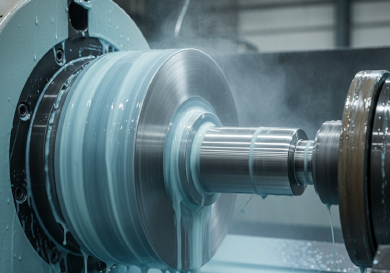
Cylindrical Grinding (often called OD Grinding) is used to shape the outside of an object that rotates around a central axis. It is the premier method for finishing cylindrical parts like shafts, axles, and rollers that require perfect roundness (circularity), concentricity, and precise diameter control.
At Jucheng Precision, we process hardened steel and carbide components using CNC Cylindrical Grinders. Unlike turning, which can leave tool pressure marks, grinding produces a surface finish as fine as Ra 0.2µm and holds diameter tolerances to +/- 0.002mm. Whether for a single prototype using “Between Centers” grinding or high-volume production using “Centerless” grinding, we ensure your rotating parts run true and vibration-free.
Key Specifications
| Specification | Technical Range | Note |
|---|---|---|
| Max Part Diameter | 300 mm | External Diameter (OD) |
| Max Part Length | 1000 mm | Between centers distance |
| Diameter Tolerance | +/- 0.002 mm | High precision fit |
| Roundness / Circularity | < 0.001 mm (1 micron) | Critical for high-speed shafts |
| Surface Roughness (Ra) | 0.2 µm – 0.4 µm | Mirror-like finish |
| Compatible Materials | Hardened Steel (50+ HRC), Carbide, Chrome Plated Shafts | Soft materials clog wheels |
| Process Variants | Between Centers, Centerless | Depends on part geometry |
Grinding Methods
| Method | Description | Key Benefits & Applications |
|---|---|---|
| Between Centers | The part is held by center holes on both ends. The part rotates while the grinding wheel removes material. | Benefit: Highest concentricity between multiple diameters. Can be removed and re-loaded accurately. App: Precision drive shafts, turbine spindles. |
| Centerless Grinding | The part sits between a grinding wheel and a regulating wheel without being held by centers. | Benefit: Extremely fast for high-volume simple parts. No center holes needed. App: Dowel pins, needle rollers, small pistons. |
| Plunge Grinding | The wheel moves radially into the part (like a plunge cut) rather than traversing along it. | Benefit: Can grind shoulders and complex profiles if the wheel is dressed to shape. App: Stepped shafts, bearing races. |
Design Guidelines for Cylindrical Grinding
Center Holes:
For “Between Centers” grinding (the most accurate method), the shaft must have center holes (usually 60°) drilled on both ends during the turning phase. Tip: Specify center holes on your drawing; do not remove them.
Corner Radii:
A grinding wheel breaks down at its sharp corners. It is impossible to hold a perfect sharp 90° corner against a shoulder. Tip: Design an undercut (relief groove) or a large fillet radius at the shoulder to allow the wheel to clear.
Interrupted Cuts:
Grinding shafts with keyways or cross-holes causes “interrupted cutting,” which can damage the wheel or cause vibrations. Tip: While possible, it increases cost. Ensure these features are deburred before grinding.
Stock Allowance:
We typically need 0.2mm – 0.4mm of extra material left on the diameter after heat treatment to ensure we can grind underneath any oxidation or decarburization layers.
Industry Applications
Hydraulics
Piston rods for hydraulic cylinders are ground and chrome-plated to ensure a perfect seal under high pressure.
Automotive
Camshafts and crankshafts require precise cylindrical grinding of lobes and journals to ensure engine timing and smooth operation.
Electric Motors
Motor shafts are ground to ensure the rotor spins perfectly concentric with the stator air gap, reducing noise and vibration.
Bearings
The inner and outer races of ball bearings are ground to micron-level roundness tolerances to minimize friction.