
CNC machining cost per part calculation is more useful when it separates recurring production cost from one-time preparation and risk. The same geometry can have a very different unit price at one piece, twenty pieces, and a repeat batch because setup, programming, material yield, tooling, finishing, inspection, and quantity are distributed differently. A credible estimate should show what drives the number and which assumptions can still change.
A Unit Cost Is a Model

Build the cost model
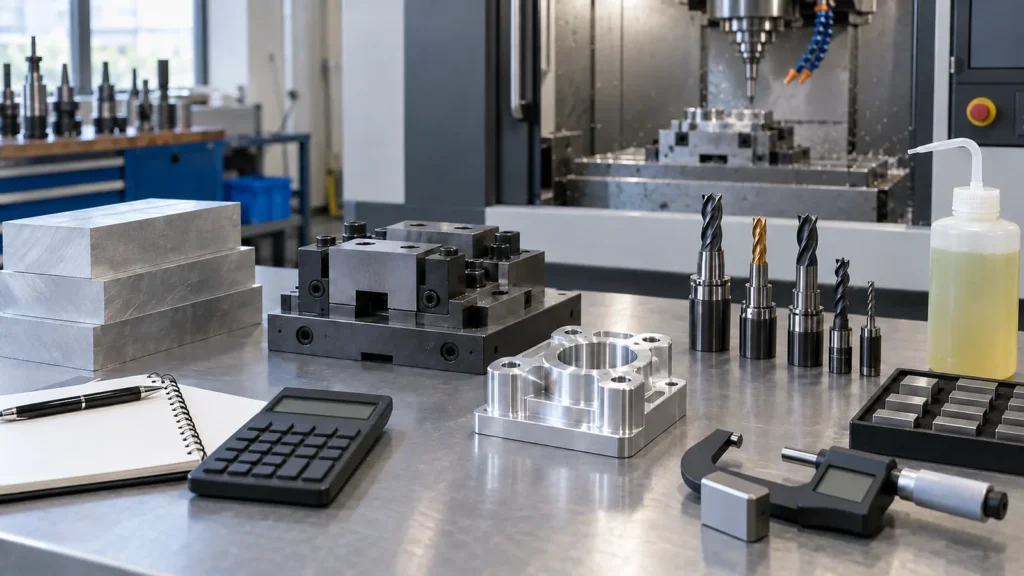
| Cost block | What changes it | RFQ information |
|---|---|---|
| Material | Grade, stock size, yield, and scrap allowance | Exact grade, condition, quantity, and finish |
| Machining | Features, access, removal volume, material, and cycle time | 3D model, drawing, and required quantity |
| الجودة | Sampling, reports, gauges, CMM, and functional tests | Acceptance records and critical characteristics |
Allocate fixed work correctly
Programming, drawing review, fixture preparation, first-piece setup, tool proving, and inspection planning may happen once per batch rather than once per part. If a setup costs $300 and the order contains 10 parts, that work contributes $30 per part; at 100 parts, it contributes $3 per part. The arithmetic is simple, but the quote should state whether the charge is included in the unit price or shown separately.
A repeat order may reduce preparation effort, but it does not remove revision review, material verification, setup confirmation, or quality checks automatically. The actual route depends on the part, current revision, quantity, and production conditions.
Estimate recurring cost
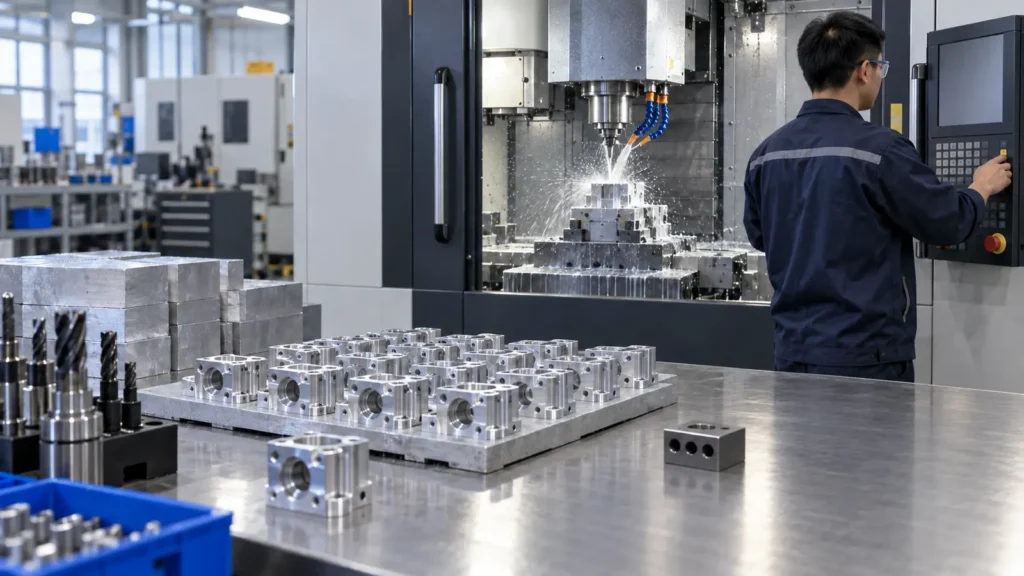
Tolerances are a cost variable, but tightening every dimension is rarely the best way to control quality. The site’s CNC machining tolerances guide explains why functional limits should be separated from general geometry. A clear drawing helps the supplier price the precision that the part actually needs.
Show quantity effects
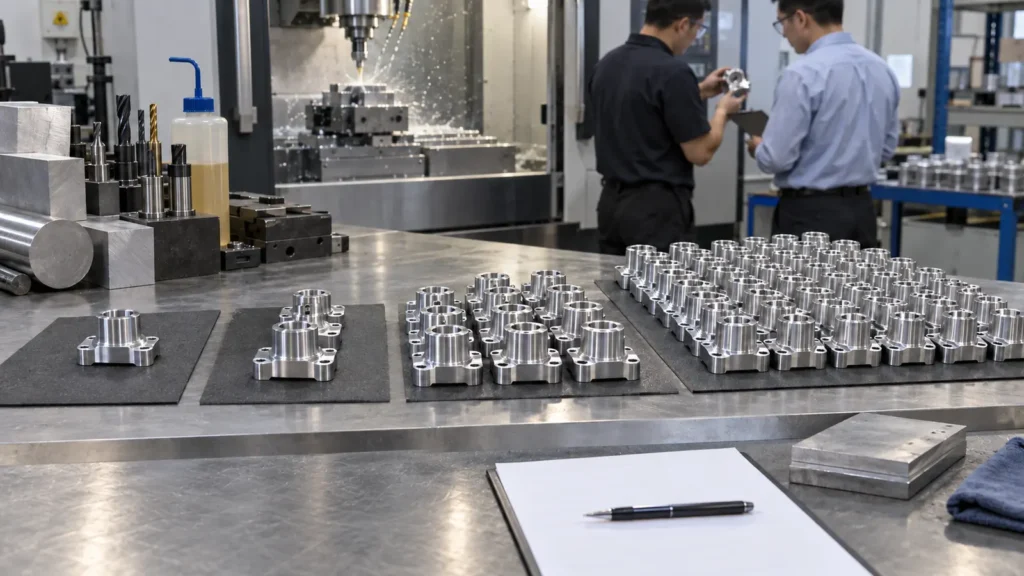
- Confirm whether quantity means total parts, per release, or annual demand.
- Separate one-time engineering from recurring production cost.
- Check whether outside finishing has minimum order charges.
- Record which assumptions change when quantity changes.
Compare quotes fairly

Cost calculation FAQs
What is the largest CNC cost driver?
It depends on the part. Cycle time, material, setup count, difficult features, finishing, inspection, and quantity can each dominate in different projects. A good estimate identifies the active drivers instead of assuming machine time is the only factor.
Does a larger quantity always lower unit cost?
Often, fixed preparation is spread across more parts, but material yield, tooling, finishing minimums, inspection scope, and capacity can change the result. Ask for quantity-break assumptions.
Can a tighter tolerance change the quote?
Yes. It may require extra finishing, more stable workholding, additional inspection, slower processes, or tighter material and temperature control. Tighten only the characteristics that protect function.
What should a cost-comparison RFQ include?
Include the current drawing and model, material, quantity, finish, critical tolerances, inspection documents, packaging, and delivery assumptions so every supplier prices the same scope.