
+86-188-7042-1176
project@jcproto.com
Mon-Fri: 8am-6pm (GMT+8)
EN
ISO 9001:2015 Certified
Zinc Zamak 3
Zamak 3 is the world's most widely used zinc alloy for die casting and precision CNC prototyping. Known for its excellent balance of physical and mechanical properties, it offers superior dimensional stability, high impact strength, and exceptional finishability. At Jucheng Precision, we specialize in both the functional CNC prototyping of Zamak 3 from solid billets and high-precision secondary machining for die-cast parts. As an IATF 16949 certified manufacturer, we leverage high-speed CNC centers to deliver zinc components for the automotive and electronics industries that require tight tolerances, complex internal features, and premium surfaces ready for decorative plating.
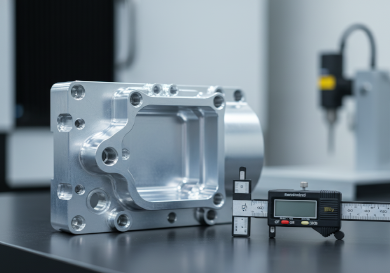
Zamak 3 Machining Capabilities
| Capability | Technical Description | Jucheng Advantage |
|---|---|---|
| Functional Prototyping | CNC machining solid Zamak 3 billets to simulate die-cast parts for fit and function testing before tooling. | We provide accurate physical models that match the mechanical properties of final die-cast components, reducing development risk. |
| Secondary Operations | Precision post-machining of die-cast zinc parts, including boring, facing, and high-tolerance tapping. | Our automated setups ensure high repeatability for large batches of automotive and electronic housings. |
| High-Speed Drilling | Zamak 3 is highly machinable. We utilize high-speed spindles for rapid drilling of intricate hole patterns. | Significantly reduces cycle times and costs for parts requiring multiple assembly points or fastening features. |
| Surface Prep for Plating | Machining surfaces to Ra 0.8μm or better to ensure high-quality adhesion for Chrome or Nickel plating. | Delivers “Class A” cosmetic surfaces for consumer hardware and luxury automotive trim. |
Fabrication Guidelines for Zamak 3 Zinc Alloy
Soft Material Strategy:
Zamak 3 is non-abrasive and relatively soft. Tip: We use sharp, uncoated carbide tools with high rake angles to prevent material smearing and ensure crisp exit edges.
Workholding Sensitivity:
Zinc is dense but can be more brittle than aluminum under high point loads. Tip: We use custom soft jaws to distribute clamping pressure evenly, preventing deformation or cracking of thin-walled housing sections.
Coolant Usage:
While zinc can be machined dry, water-soluble coolant is recommended to keep the part cool and flush away chips. Tip: This maintains dimensional stability and prevents the material from building up on the cutting edge.
Threading & Tapping:
Zamak 3 accepts threads excellently. Tip: We use roll taps (forming taps) for smaller holes to create stronger threads without producing extra chips in blind holes.
Primary Applications
Automotive Components
Door lock housings, mirror brackets, and fuel system parts that require high dimensional stability and strength.
Consumer Electronics
Shielding cans, connector housings, and internal frames that benefit from zinc’s excellent EMI/RFI shielding properties.
Hardware & Locks
Precision lock cylinders, handles, and decorative bathroom fixtures that will be polished and Chrome plated.
Industrial Machinery
Small gears, pulleys, and complex levers where zinc’s self-lubricating properties reduce wear on moving parts.
Properties
| Density | 6.60 g/cm³ |
| Tensile Strength | 283 MPa |
| Yield Strength | 221 MPa |
| Hardness | 82 HB (Brinell) |
| Elongation at Break | 10% |
| Thermal Conductivity | 113 W/m-K |
| Electrical Conductivity | 27% IACS |
| Melting Point | 381 - 387 °C |
| Machinability Rating | Good |
| Corrosion Resistance | Good |
| Max Part Size | 2000 x 800 x 600 mm |